
Dental Implants: The Gold Standard
for Tooth Replacement
At Fountainville Family Dentistry, replacing a missing tooth is not only about filling the empty space in your smile. The goal is also to restore normal chewing function and support the health of the jawbone.
Dental implants are often considered the best option for missing teeth because they replace the full tooth structure, from the root to the crown without involving other teeth.
We use biocompatible materials together with digital tools like CBCT 3D imaging. This helps us make implant treatment more precise, more predictable, and long lasting.
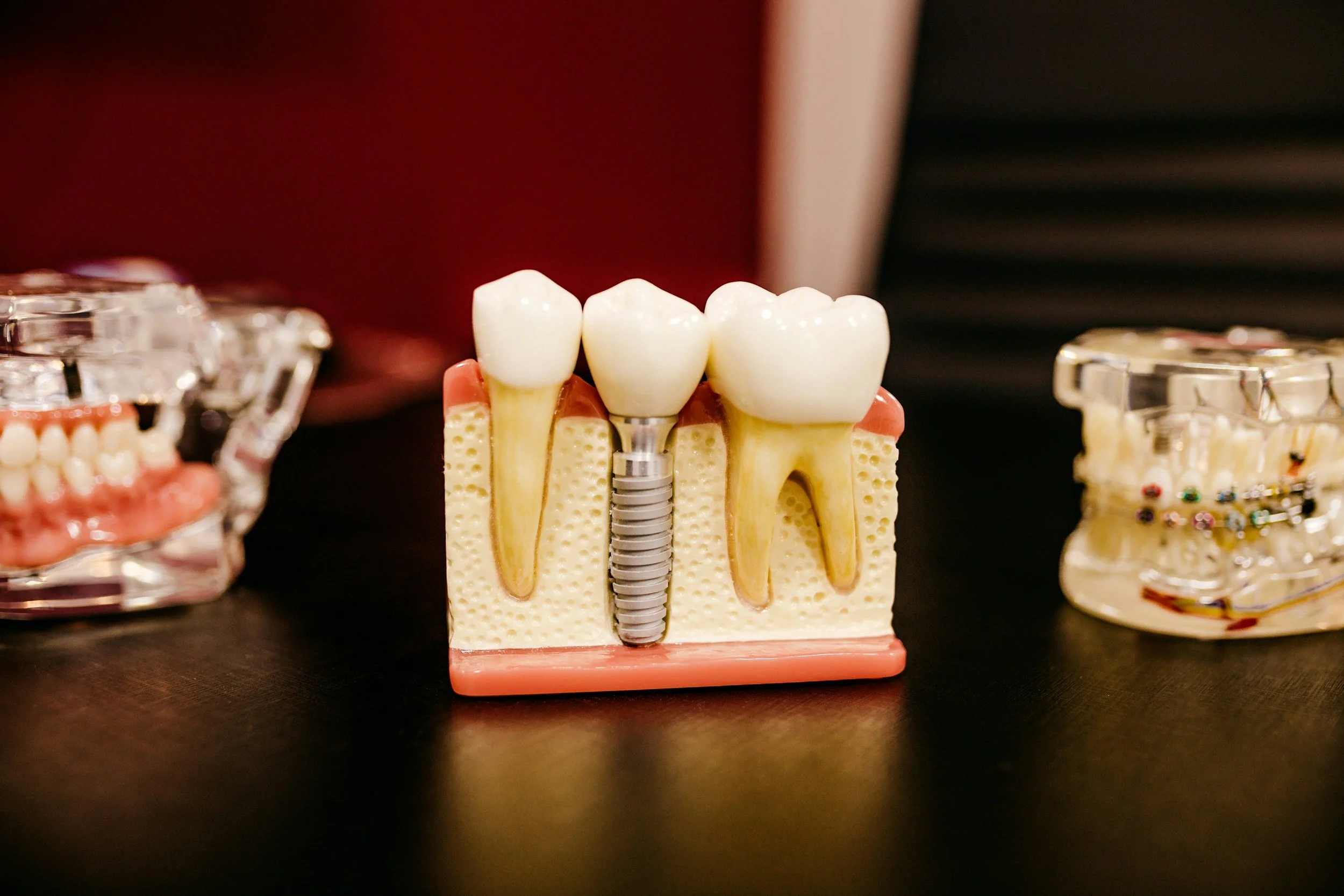
A dental implant is a small screw-like post placed inside the jawbone. It is usually made from medical-grade titanium. The implant works like an artificial tooth root.
After the implant is placed, the bone slowly grows around it and joins with the implant surface. This process is called osseointegration. This helps make the implant stable inside the jawbone.
Once healing is complete, a custom zirconia crown is attached on top of the implant.
Implants are different from bridges or dentures. Bridges depend on nearby teeth for support, while dentures sit on the gums. An implant is fixed inside the jawbone itself.
What is a Dental Implant?
Clinical Benefits of Dental Implants
Choosing a dental implant is not only about appearance. It also gives long-term support for the mouth and jawbone. Implants work differently compared to bridges or removable dentures.
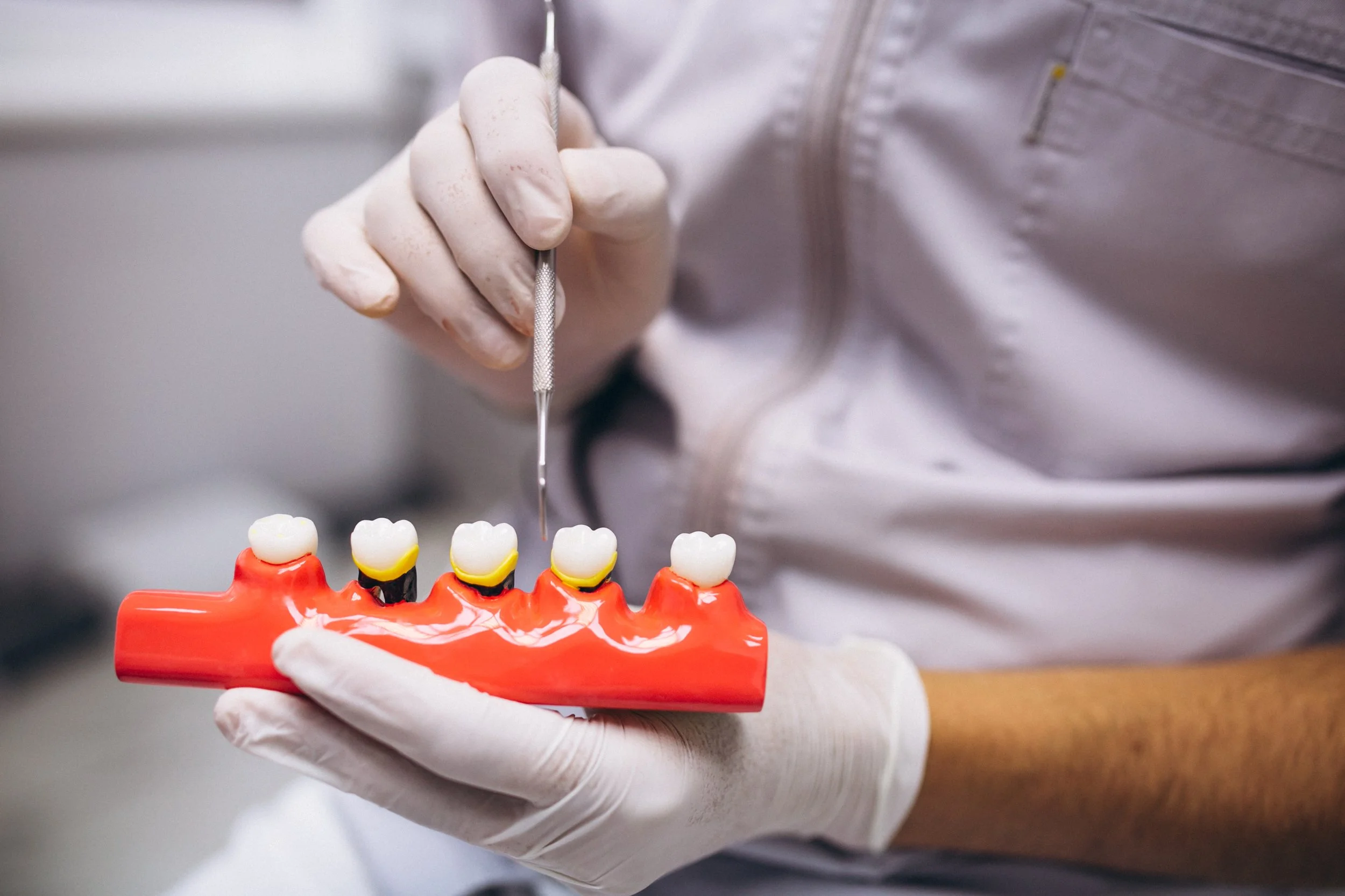
Preservation of the Jawbone When a tooth is lost, the jawbone in that area slowly starts shrinking. This happens because the tooth root is no longer there to stimulate the bone. Over time, the bone can lose its shape and density.
A dental implant works like a tooth root. It gives stimulation to the jawbone and helps keep the bone healthy and strong.
Protection of Neighboring Teeth A traditional bridge usually needs support from nearby teeth. These teeth often need to be shaped down to hold the bridge.
A dental implant stands on its own. The nearby healthy teeth do not need to be changed. This helps preserve more natural tooth structure.
Restored Biting Force The implant is fixed inside the jawbone. Because of this, it can handle chewing pressure in a more natural way. Many patients can eat normal foods again without worrying that the tooth replacement may move or loosen.
Facial Structural Integrity Dental implants help support the jawbone and facial structure. When bone is preserved, the lower face keeps its normal shape better. Long-term tooth loss can sometimes make the face look sunken around the mouth area. Implants help reduce this problem.
The Implant Process: Step-by-Step
A dental implant is done in stages. This helps the area heal properly and helps the implant stay stable for long-term use. The timeline can be different for each patient, but the process is usually similar.
Phase 1: Comprehensive Evaluation
The process starts with a clinical exam, digital X-rays, and a CBCT scan. We check your bone density and overall oral health to see if you are a good candidate for implants.
If the bone is too thin in the area, a bone graft may also be recommended.
Phase 2: Surgical Placement
During the surgical visit, local anesthesia is used to make the area fully numb. The implant is then placed into the jawbone.
Patient Experience: You may feel pressure and vibrations during the procedure, similar to getting a filling. The treatment itself should not feel painful.
After the implant is placed, the gums heal over the area. This healing phase usually takes around 4 to 6 months.
Phase 3: Abutment Attachment
After healing, the implant joins with the jawbone. This process is called osseointegration. Once the implant becomes stable, a small connector piece called an abutment is attached.
The abutment stays above the implant and supports the new tooth.
Phase 4: Final Restoration
After the gums heal around the abutment, we take a digital scan of the area. This is used to make a custom crown.
The crown is matched to the color of your nearby teeth. Once placed, the implant works like a normal tooth.
The Digital Workflow: Precision Implantology
At Fountainville Family Dentistry, we use a digital workflow for implant treatment. This helps improve surgical safety and treatment accuracy.
What we check during the visit:
Who is the Right Candidate for Dental Implants?
Most adults in good general health can be candidates for dental implants. But there are some clinical things that also need to be checked.
Frequently Asked Questions
-
No. The area is made fully numb with local anesthesia before the procedure starts. Most patients say the recovery feels similar to a simple extraction. In many cases, normal over-the-counter medicines are enough during healing.
-
The titanium implant post can last many years, sometimes for life, if taken care of properly. The zirconia crown on top may need replacement after around 10 to 15 years because of normal wear. Patients with heavy wearing pattern may need more frequent replacement of the crown.
-
You clean a dental implant like a natural tooth. Brushing two times a day and flossing daily is important. This helps keep the gums healthy around the implant and helps prevent infection around the implant area.
-
Implants can cost more in the beginning compared to bridges or dentures. But they also help protect the jawbone and do not depend on nearby teeth for support. This may help reduce future dental problems.