
Crowns and Bridges:
Reinforcing Strength and Symmetry
At Fountainville Family Dentistry, we provide restorative treatments to protect damaged teeth and replace missing ones. Crowns and bridges are commonly used for this purpose. They help restore normal function and improve the appearance of your smile.
A filling is not always enough. This can happen when there is large decay, a significant crack, or old dental work that has failed. In these cases, a crown or bridge provides better support.
Dental Crowns: Protecting Your Damaged Tooth
A crown, also called a cap, is designed to cover the entire visible portion of a tooth.
While a filling repairs only a part of the tooth, a crown covers it completely. It acts as a protective layer, helping prevent the tooth from breaking during chewing.

Clinical Indications for a Crown
We suggest a crown only when it is needed for the health of the tooth. If it is not required, we do not recommend it.
Rule of Third
If more than one-third of the tooth is damaged, a filling may not last. A crown provides better support.
Post-Root Canal Tooth
After a root canal, the tooth becomes weaker and can break more easily. A crown helps protect it.
Old, Cracked Fillings
Old fillings can cause cracks that weaken the tooth. A crown holds everything together and adds strength.
Extreme Wear
Teeth worn down from grinding can expose inner layers. Crowns restore shape and height.
Dental Bridges – The Non-Invasive Solution for Missing Teeth
A dental bridge is used to replace one or more missing teeth. It helps to fill the gap in your smile. A bridge uses the teeth on both sides of the empty space. These are called abutment teeth. They support the bridge. In between, there is a replacement tooth. This is called a pontic.
All parts work together as one unit. It helps restore chewing and also improves the look of your smile.
The Consequences of Missing Teeth
A missing tooth is not only about looks. It can affect other teeth and your bite.
Drifting and Leaning
Teeth next to the empty space can start to move. They may lean into the gap over time.
Bite Misalignment
When teeth move, your bite can change. This can cause uneven pressure while chewing. It may also lead to jaw discomfort and other issues later.
Gum Disease
When teeth are not in the proper position, cleaning becomes harder. Food can get stuck in tight areas. This can increase the chance of gum problems and bone loss.

Types of Dental Bridges
We choose the type of bridge based on where the tooth is missing and the condition of nearby teeth.
The Digital Flow: Accuracy and Comfort
At our practice, we use a digital workflow for crowns and bridges. This helps reduce common problems seen with older methods. It also makes the process more simple for patients.
Intraoral Scanning vs. Traditional Impressions
Earlier, patients had to bite into trays filled with impression material. This could feel uncomfortable. Some patients also had gag reflex during the process.
The Digital Wand
Now we use an intraoral scanner. It is like a small camera. It takes many 3D images of your teeth. These images are combined to form a digital model.
Better Detail
Old impression materials could shrink or get damaged. Digital scans do not have this issue. The model is more exact. This helps the lab create a crown or bridge that fits well with your teeth and gums.
3D Imaging and Design
After getting the digital data, it is sent to the lab. The lab can review it quickly. The shape, fit, and color can be adjusted before making the final restoration.
This helps reduce the need for changes later. The final crown or bridge fits better and feels more natural when placed.
The Clinical Process: What to Expect
A crown or bridge is usually done in two visits. We explain each step so you know what happens and how it feels.
Appointment 1: Preparation and Scanning
Tooth Preparation
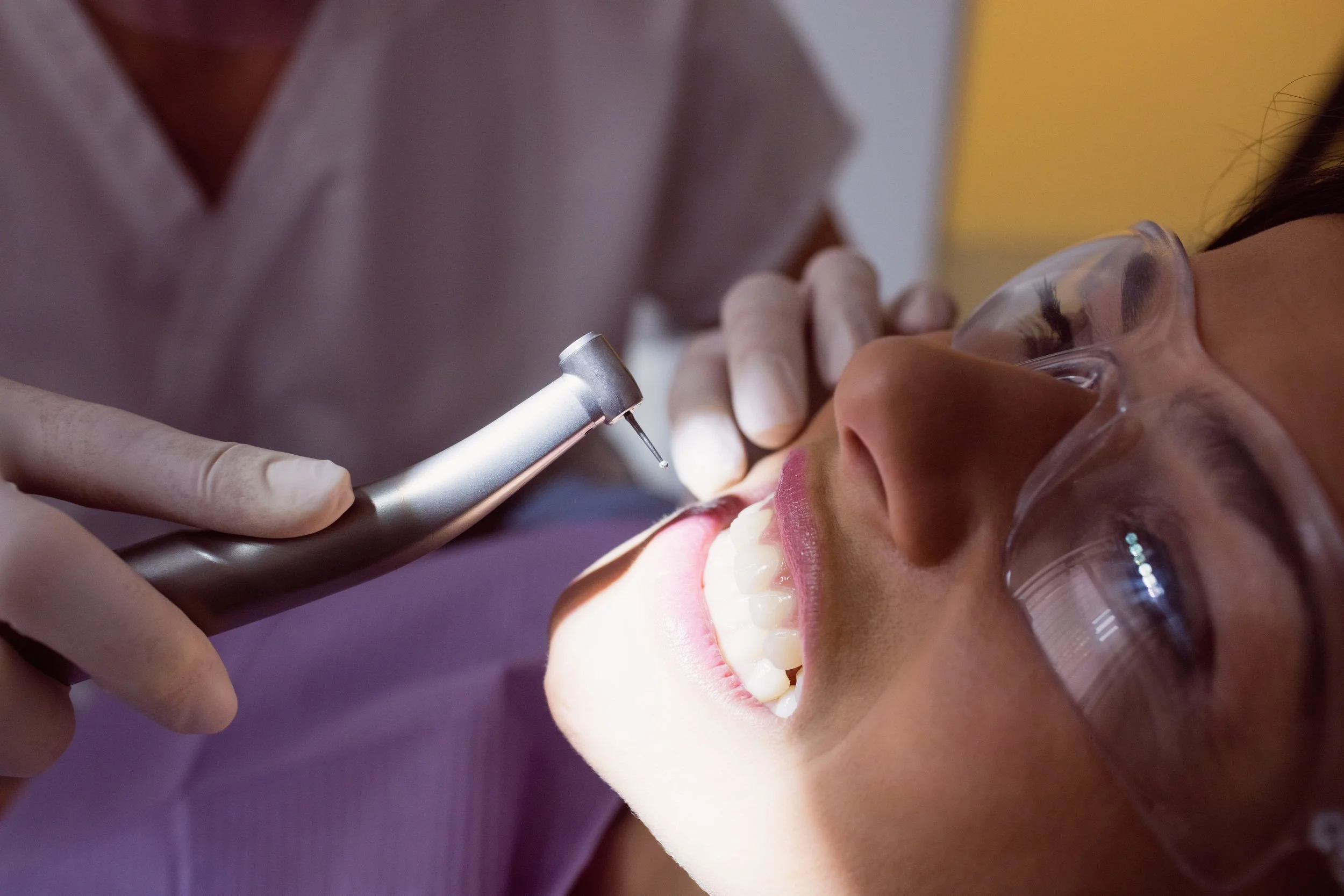
After anesthesia, the dentist removes a small amount of enamel. This is necessary to create space for the crown or bridge. You may hear the sound of dental instruments, and water spray is used to keep the area cool. If there is a crack or cavity, these areas are first restored through a core build-up to strengthen the tooth.
Digital Scan
A precise digital scan is taken using an intraoral scanner. This creates a detailed 3D model of your tooth for designing a custom crown or bridge.
Temporary Restoration
A temporary crown or bridge is placed to protect the tooth and maintain your smile until the final restoration is ready.
Appointment 2: Delivery and Cementation
Evaluation
The temporary restoration is removed. The final crown or bridge is placed and carefully checked for fit, color, and bite.
Cementation
Once everything is confirmed, the final restoration is permanently fixed using strong dental cement.
Polish
The edges are smoothed and polished for comfort, natural feel, and easy cleaning.
Frequently Asked Questions
-
In many cases, yes. Many PPO insurance plans cover crowns and bridges because they are needed for dental health. The coverage can vary based on your plan.
-
The procedure is done with local anesthesia. This keeps the area numb. You may feel some pressure but not pain. After the visit, mild gum tenderness or cold sensitivity can happen for a short time.
-
With proper care, crowns and bridges can last many years. Regular checkups every six months are important. In most cases, they last around 10 to 15 years or more.
-
After a root canal, there is no blood vessels or nerves inside the tooth. which makes the tooth weaker r. It can break more easily during chewing. A crown helps cover and protect the tooth from damage.
-
A filling works for small damage. If the damage is large, a filling may not hold well. It can lead to more breakage. In such cases, a crown is the better option.
Book an appointment.
Schedule your dental consultation with our experienced team today and take the first step towards optimal oral health. Our dedicated professionals are ready to provide you with personalized, quality care at your convenience.