
Dentures: Restoring Function and
Facial Aesthetics
At Fountainville Family Dentistry, we understand that losing multiple teeth or a full arch of teeth affects more than your smile. It can affect speaking, eating, and also the shape of your face over time.
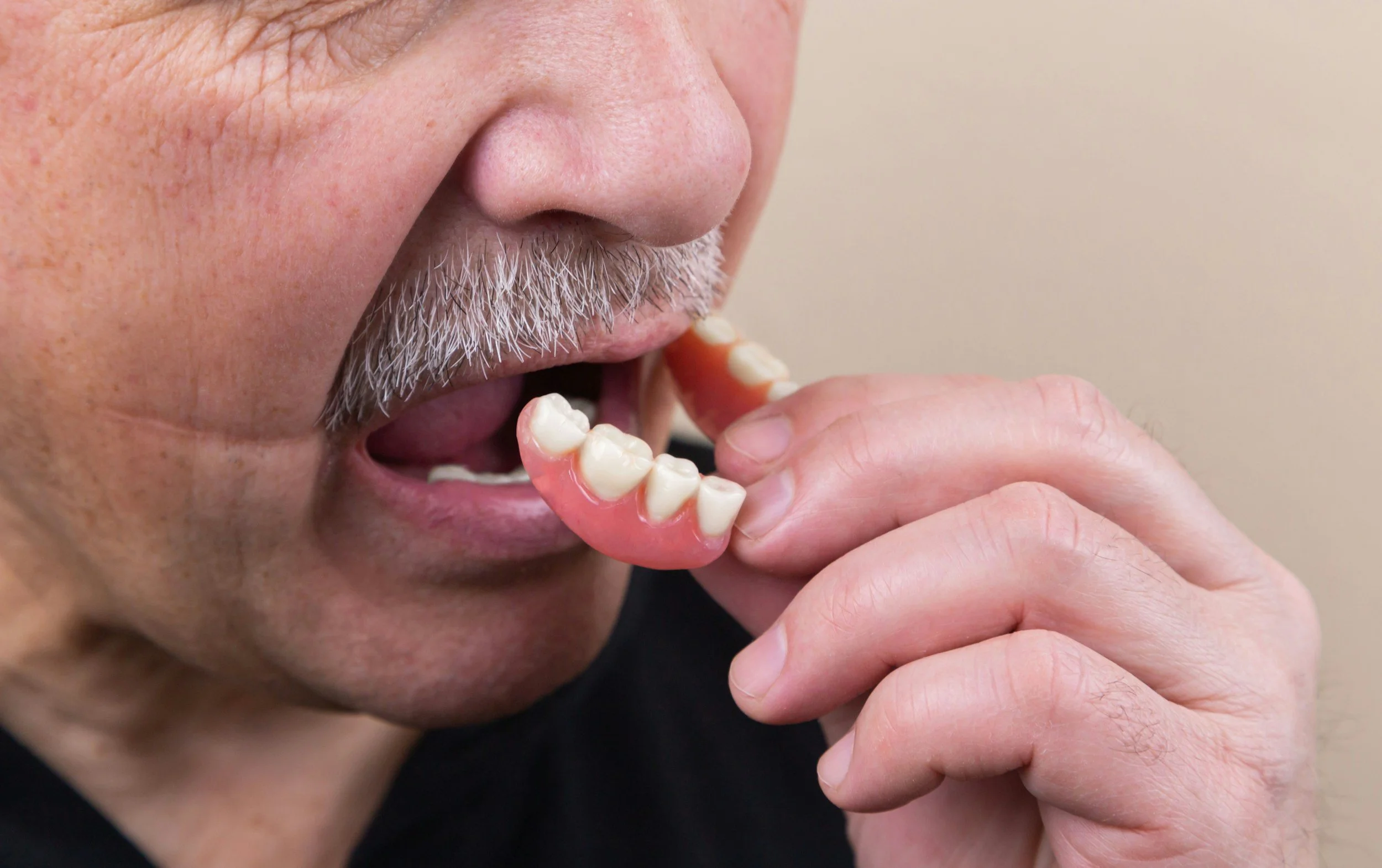
Dentures are custom-made removable appliances used to replace missing teeth and the surrounding gum tissue. They help bring back chewing function and improve oral health.
Dentures also help support the facial muscles better, which can help the face keep a more natural shape.
The Impact of Tooth Loss on Facial Structure
When teeth are lost, the jawbone slowly starts losing density. This happens because the bone no longer gets stimulation from the tooth roots. Over time, the bone begins shrinking. This process is called resorption.
Without support from the teeth and jawbone, the muscles around the lips and cheeks can start moving inward. This may create a sunken look around the mouth and can make wrinkles appear earlier.
Our dentures are made not only to help with chewing, but also to support the lips and facial shape. We carefully check the bite so the dentures can help maintain a more natural facial appearance and support the lower part of the face.
Types of Dentures Provided at Our Practice
Depending on how many teeth are missing and the condition of your jawbone, different denture options may be used.
Type 1: Complete (Full) Dentures
Complete dentures are used when all teeth are missing in the upper arch, lower arch, or both.
Conventional Full Dentures
These dentures are placed after the gums heal from extractions. This helps give a more accurate fit because the gums and bone have already changed shape during healing.
Immediate Dentures
These are made before the teeth are removed and placed right after extraction on the same day of extraction. This means you always have teeth or replacement of teeth. But during healing, the gums change shape, so adjustments or relining is needed later.
Type 2: Partial Dentures
Partial dentures are used when some healthy natural teeth are still present. They help fill empty spaces and help stop nearby teeth from shifting.
Cast Metal Partials
These use a metal framework for strength and support. Small metal clasps help hold the denture onto nearby teeth.
Flexible Partials
These are made from a flexible material without metal clasps. They are designed to blend more naturally with the gums.
Type 3: Implant-retained Dentures (over-dentures)
Some patients have trouble with loose or moving dentures, especially in the lower jaw. Implant-retained dentures can help with this problem.
Mechanical Stability
Two to four dental implants are placed into the jawbone. The denture then attaches onto the implants to help keep it more stable.
Bone Preservation
The implants help stimulate the jawbone. This can help slow down bone loss and help support the facial structure better than regular removable dentures
The Clinical Fabrication Process
Making a denture takes multiple steps. Each step is important for fit, comfort, and function.
Step 1: Initial Consultation and Impression or Digital Scans
First, we check your gums and oral tissues carefully. Digital scanners are used to create a model of your mouth. If implant-retained dentures are being planned, a CBCT 3D scan may also be taken to check bone density, location of nerves, and other anatomy.
Step 2: Bite Registration
We measure how the upper and lower jaws come together. This helps make sure the teeth are the correct height and the bite feels comfortable.
Step 3: The "Try-In" Appointment
Before the final denture is made, the teeth are placed in wax so you can see how they look in your mouth. At this stage, changes can still be made to the shape, shade, or position of the teeth.
Step 4: Final Delivery and Adjustments
After the final denture is completed, it is placed in the mouth and checked carefully. We look for pressure areas or spots that may feel uncomfortable. We also explain how to place, remove, and clean the denture at home.
Maintenance: Why Dentures Need Regular Care
Even though dentures are not natural teeth, the mouth still changes over time. Because of this, dentures also need regular care and adjustments.
Relining: Over time, the jawbone slowly changes shape and becomes smaller. This can make the denture feel loose. A reline adds new material under the denture so it fits the gums better again. This is often needed every a few years.
Rebasing: Sometimes the denture teeth are still fine, but the pink base becomes worn or damaged. In that case, the entire base of the denture (pink part) can be replaced while keeping the same denture teeth.
Frequently Asked Questions
-
It usually takes a few weeks to get used to dentures. In the beginning, softer foods are easier to eat. Cutting food into smaller pieces and chew with your back teeth can also help. With time, the mouth muscles slowly adjust and eating becomes more normal.
-
Dentures should be removed and cleaned every day. A soft brush and non abrasive toothpaste can be used. Simply brush inside and outside of the denture, rinse thoroughly. A denture cleaner tablet and an ultrasonic denture cleaner pod also work very well.
-
No. Dentures should be removed during sleep. This gives the gums time to rest. Wearing dentures all the time can lead to irritation or infection.
-
A denture can last many years with proper care. In many cases, they last around 5 to 10 years. But over time the mouth changes shape, so a new denture may eventually be needed for a better fit.
-
Some words and sounds may feel different at first, especially sounds like “S” or “F.” This is normal in the beginning. Most patients adjust with practice and regular speaking.